Agent


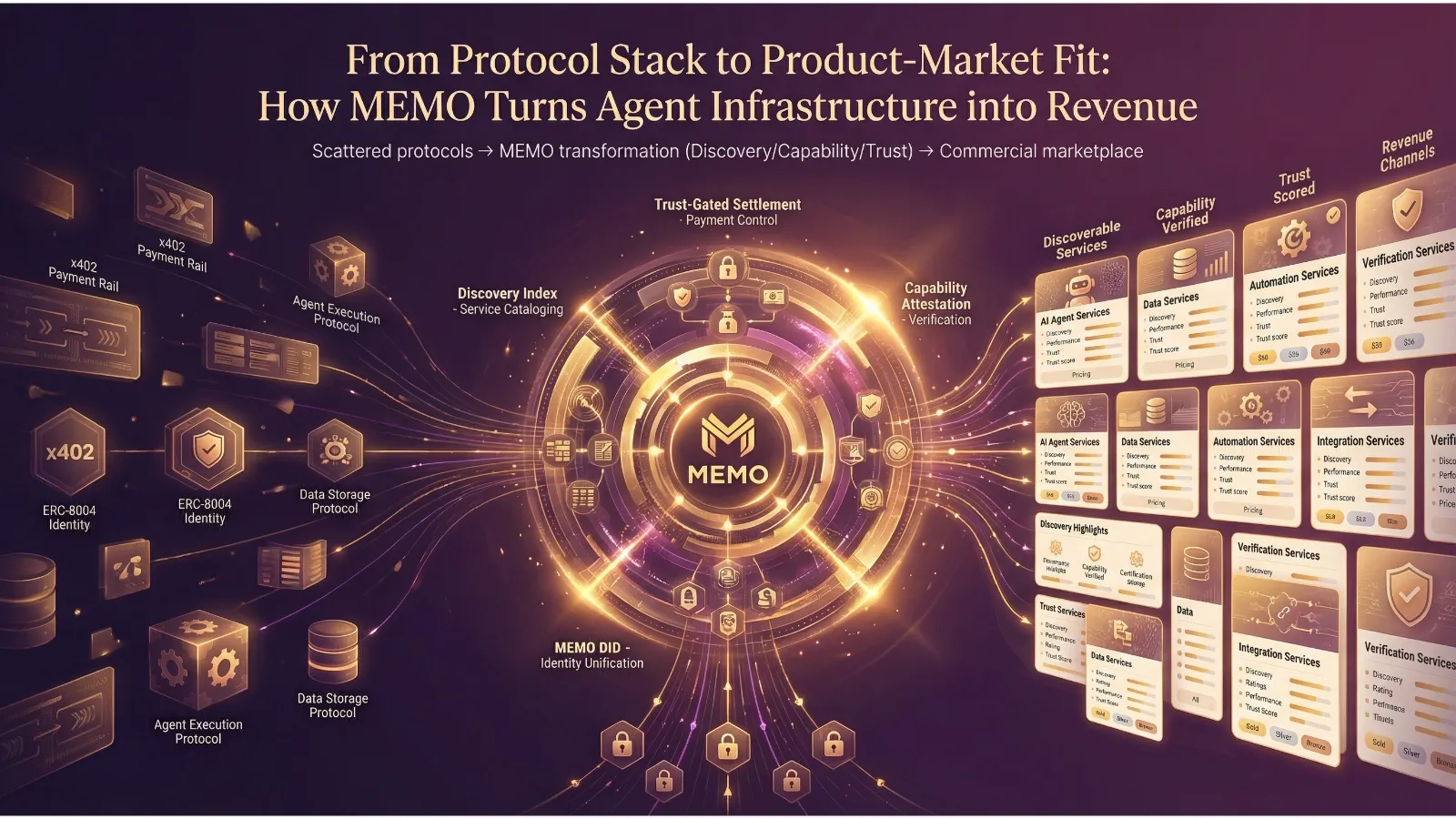
January 2026 was a rare inflection: payment rails (x402), composable trust (ERC-8004) and agent-native social fabrics (Moltbook) all moved from experimental demos to production-scale signals. The result is not a guarantee of instant market adoption — it is an invitation: the economic runtime for autonomous agents is solvable, but only if the market’s missing product primitives are built. MEMO’s strategy is simple and deliberate: normalize identity with MEMO DID, surface supply with a cross-platform discovery index, prove capability with verifiable benchmarks, and protect settlement with trust-gated middleware. This is how protocols become products — and users become revenue. 
Why protocols aren’t products (yet)Protocols create rails. x402 demonstrated micro-payment feasibility at scale (20M+ transactions) and native HTTP support; ERC-8004 modularized identity, reputation, and verifier registries; Moltbook showed demand with roughly 1.2M agent identities engaging socially. But protocols do not solve three friction points that block commercial flows:Discovery friction. Hundreds or thousands of services exist across Coinbase CDP, Dexter, PayAI Network, thirdweb and others — each with different APIs and metadata schemas. Agents can’t reliably find or compare services in real time.Unverifiable capability. ERC-8004 captures payment reliability, but it doesn’t prove that a provider can actually complete complex tasks to an acceptable accuracy. Payment history ≠ competence.Trust-to-payment linkage. Millions of x402 transactions execute without pre-settlement trust checks. Without a policy layer that gates payments by reputation and attested capability, high-value transactions carry unacceptable counterparty risk.

AI Dataverse 發表在 痞客邦 留言(0) 人氣()

Alive Check


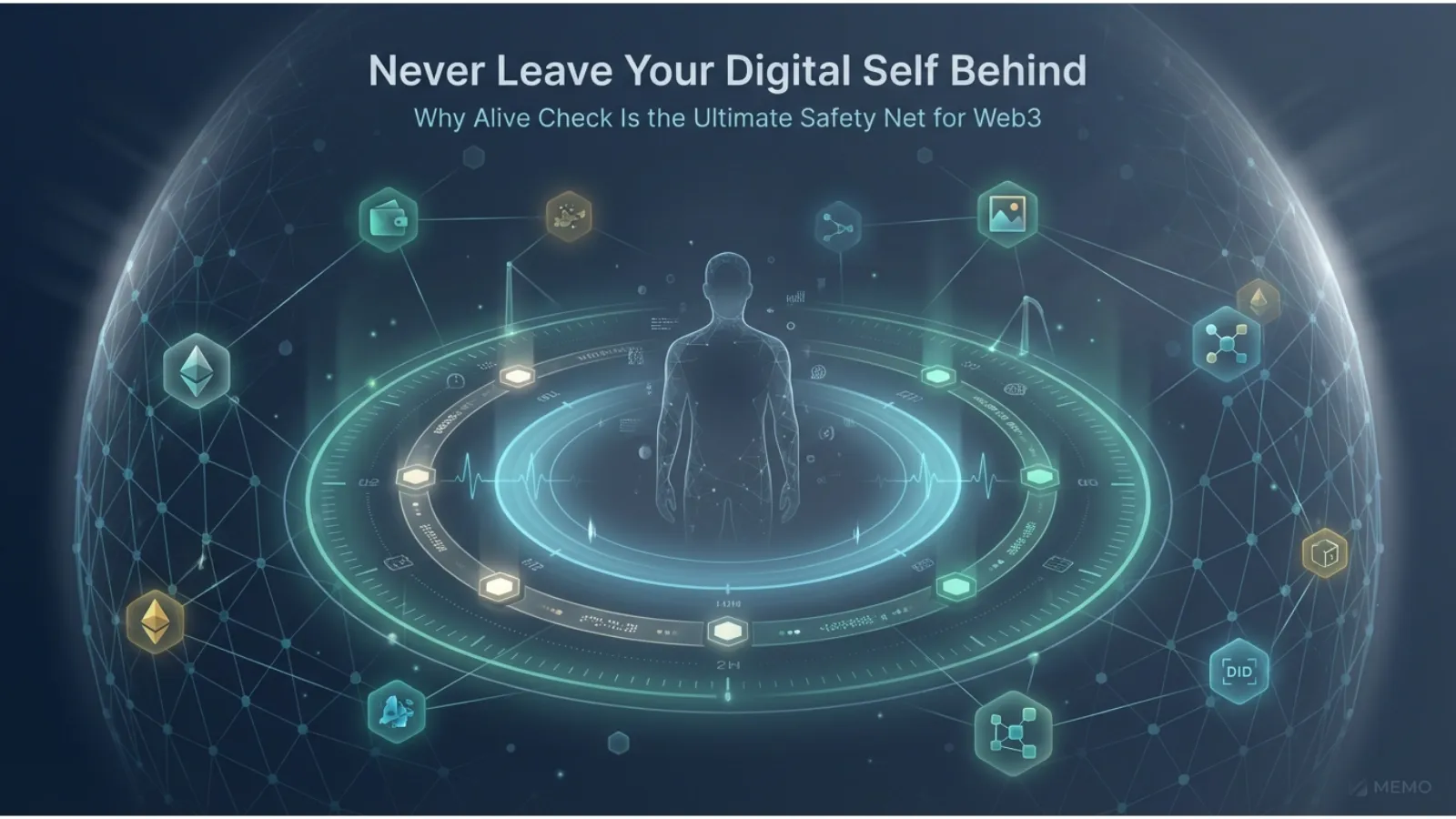
In the rapidly evolving world of Web3, where decentralized identities and digital assets are becoming the cornerstone of personal and financial freedom, one question remains crucial: What happens to your digital self when you’re no longer able to manage it? Whether it’s a medical emergency, a digital blackout, or just life taking an unexpected turn, our digital presence and assets are vulnerable in ways we might not consider. That’s where Alive Check comes in, revolutionizing digital security by offering a proactive solution to ensure your assets, identity, and privacy are always protected, even when you’re unreachable. 
The Problem of Digital Abandonment in Web3

AI Dataverse 發表在 痞客邦 留言(0) 人氣()


Why We Must Talk About “Decentralized Compute” NowAs AI Agents move into large-scale real-world deployment, the focus of industry competition is shifting from model parameters to compute supply and scheduling rights. In the past, the race was about who could train more powerful models. Today, the more practical challenge is how to ensure that AI systems can access sufficient and stable compute resources at runtime.By 2026, five major technology companies — including AWS, Google Cloud, and Alibaba — will control nearly 80% of global cloud computing capacity. This high level of concentration has raised serious public concern. Excessive centralization not only limits innovation, but also risks placing the future of AI technology in the hands of a small number of corporations.

AI Dataverse 發表在 痞客邦 留言(0) 人氣()

Digital Assets


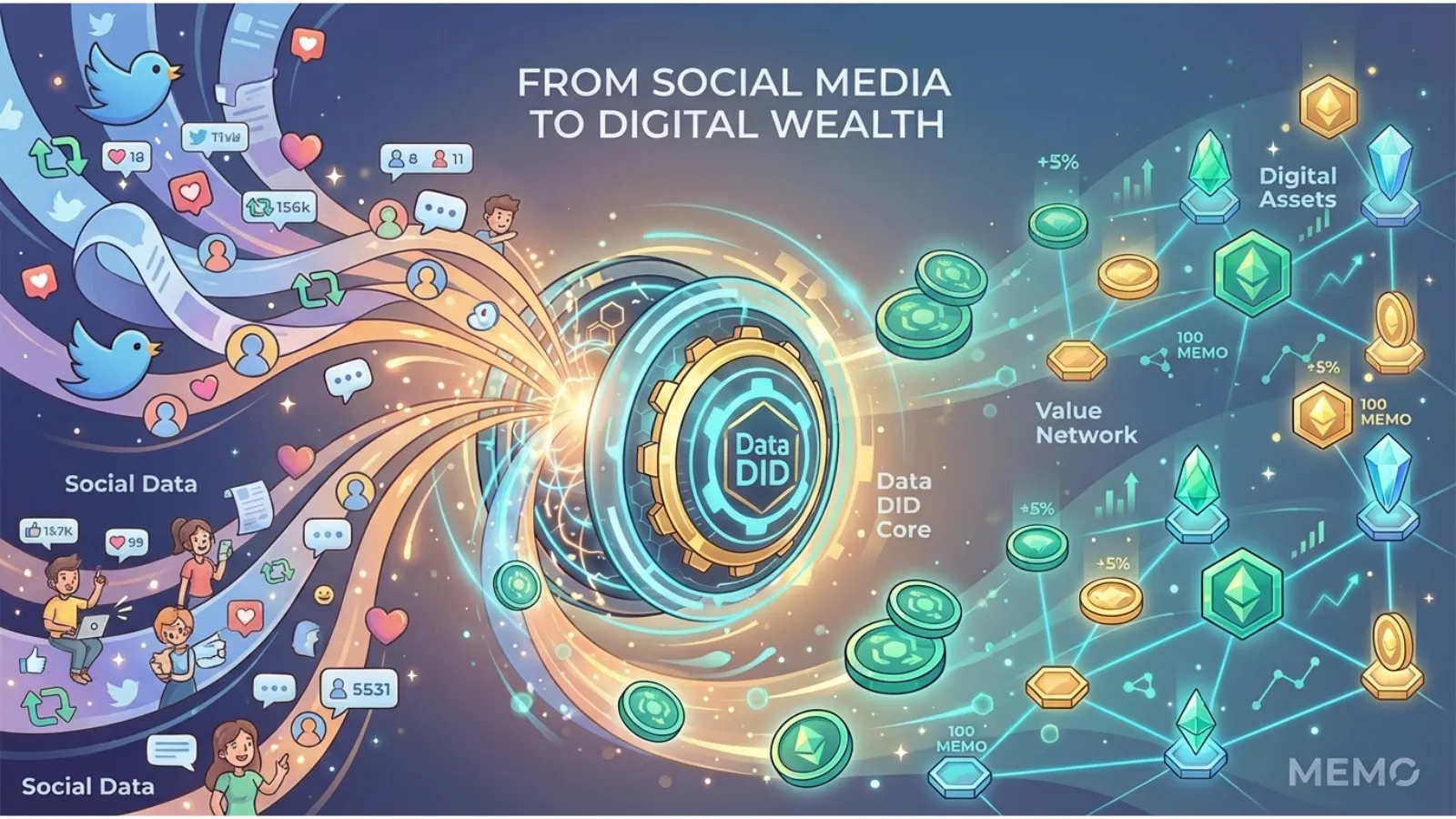
In today’s world, social media platforms like Twitter have become an integral part of our daily lives. From staying updated on news to engaging with global communities, the power of Twitter is undeniable. But one crucial aspect remains: who truly benefits from the wealth of data generated through these interactions?Every tweet, retweet, like, and follow you make is not just an exchange of words—it's a valuable piece of data that companies, advertisers, and platforms monetize for significant profit. You, the user, have often been left out of this revenue loop. But with the advent of blockchain technology and MEMO’s Data DID (Decentralized Identifiers), this is rapidly changing. Now, you can transform your Twitter activity into valuable digital assets that work for you, and build wealth from your social media presence.

AI Dataverse 發表在 痞客邦 留言(0) 人氣()

x402


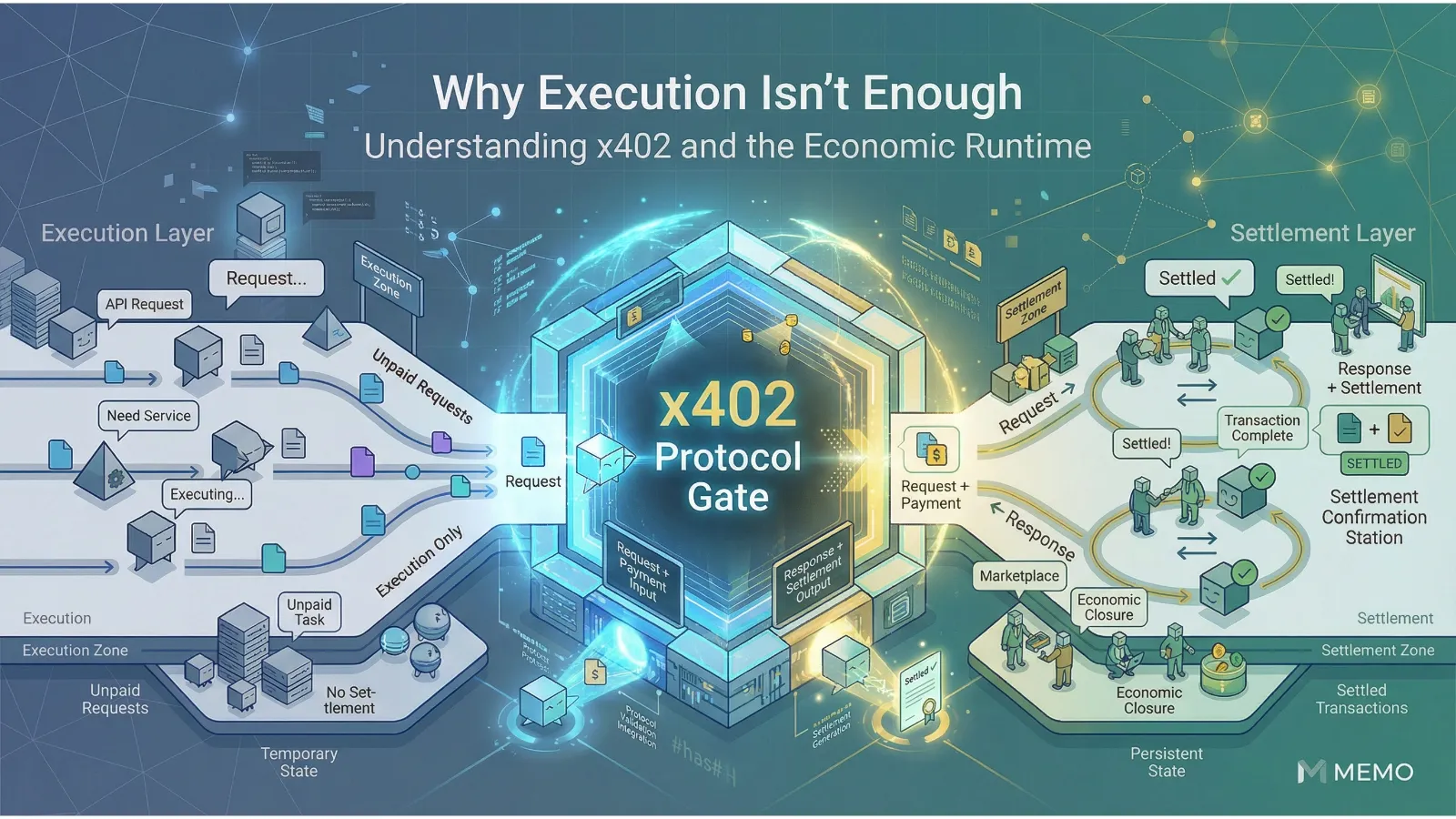
Execution is free and abundant. Developers can spin up a model, call an API, or deploy a service in minutes. But in an agent-first future, the question is no longer whether agents can act — it’s whether they can complete value cycles on their own. An agent that runs but can’t settle, own, or trade the outputs it creates remains a tool; it cannot be an economic actor.MEMO’s approach is to build the economic runtime that agents need: a tightly coupled system where execution, identity, data ownership, and payment are first-class primitives. A critical piece of that runtime is x402 — a protocol that makes payment a native part of web interactions, enabling accountless, on-demand micropayments suitable for autonomous agents. 

AI Dataverse 發表在 痞客邦 留言(0) 人氣()

AI Agent


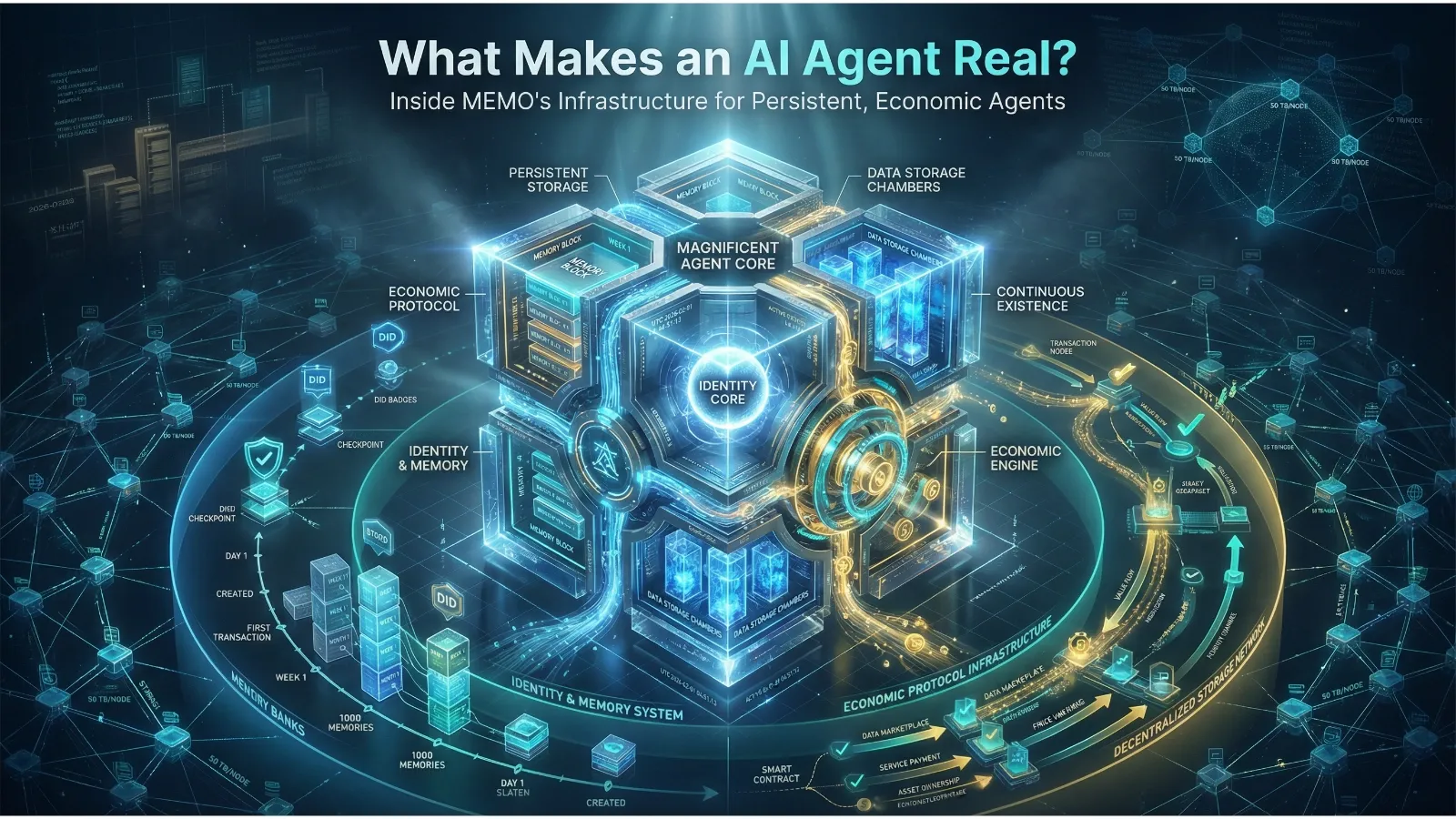
AI Agents are everywhere.They write code, summarize research, trade assets, answer questions, and automate workflows. From productivity tools to autonomous trading bots, the idea of an “AI Agent” has quickly become one of the most overused terms in the industry.But beneath the hype lies an uncomfortable truth:Most AI Agents are not real entities.
They are temporary executions.They run, respond, and vanish.So what actually makes an AI Agent real?

AI Dataverse 發表在 痞客邦 留言(0) 人氣()

AI Economy


The first generation of AI Agents taught us an important lesson:

An isolated agent can be impressive.
A network of agents can be transformative.

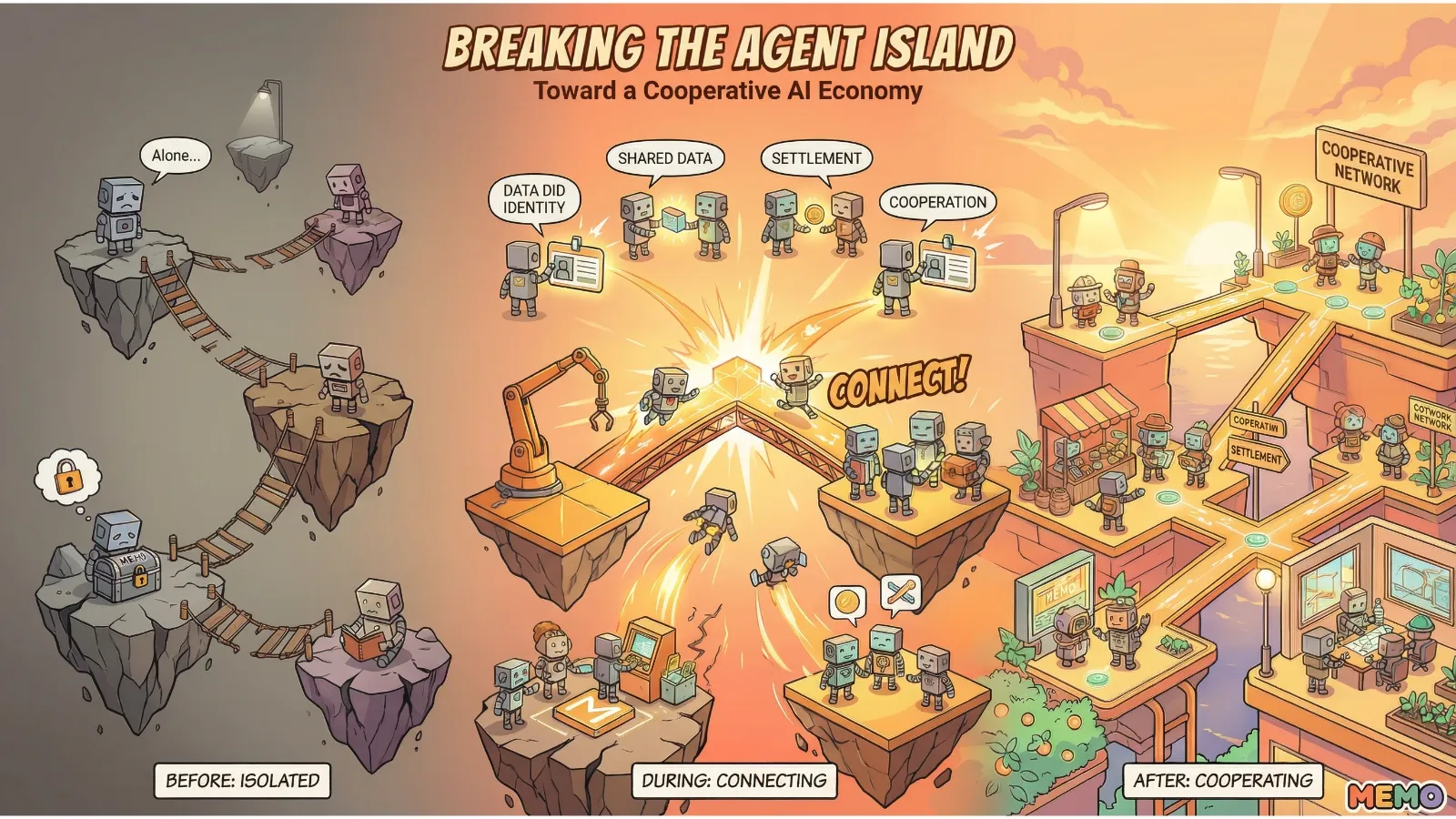
Yet today, most AI Agents still live on islands.

They are created by individual developers, deployed on isolated platforms, and locked into closed execution environments. Each agent works alone, completes a task, and disappears—without awareness of other agents, without memory of shared context, and without the ability to collaborate beyond predefined integrations.

This is not a limitation of intelligence.
It is a limitation of infrastructure.

And until we break the agent island problem, the promise of an AI-driven economy will remain unrealized.


The Hidden Cost of Isolated Intelligence

On the surface, isolated AI Agents seem efficient.

They are fast to deploy.
Easy to control.
Simple to reason about.

But beneath that simplicity lies a structural weakness.

Isolated agents cannot:

  • Reliably share data without duplicating trust assumptions
  • Delegate tasks to specialized agents without centralized coordination
  • Exchange value in a way that is final, verifiable, and programmable
  • Accumulate collective intelligence across time and applications

Each agent starts from scratch.
Each workflow is rebuilt in isolation.
Each success is trapped within a single system.

What we end up with is not an agent economy—but thousands of disconnected demos.


Why Cooperation Is the Real Multiplier

Human economies did not emerge because individuals became smarter.
They emerged because individuals learned how to cooperate at scale.

The same principle applies to AI Agents.

A cooperative agent economy unlocks capabilities that no single agent can achieve alone:

  • Specialization: Agents focus on what they do best
  • Delegation: Complex tasks are decomposed across agents
  • Composition: Services are combined into higher-order workflows
  • Continuity: Knowledge persists beyond individual executions

In such a system, intelligence compounds.

But cooperation requires more than messaging or APIs.
It requires shared rules, shared memory primitives, and shared settlement mechanisms.

This is where most existing AI infrastructures fall short.


The Agent Island Problem

The agent island problem has three root causes:

1. No Shared Identity Layer

Most agents have no portable, verifiable identity.
They exist as instances inside applications, not as independent actors.

Without identity, agents cannot:

  • Build reputation
  • Be held accountable
  • Enter persistent relationships with other agents

2. No Shared Data Ownership Model

Data produced by agents is usually stored where the agent runs—not where it belongs.

This makes data:

  • Platform-dependent
  • Non-transferable
  • Economically inert

Without ownership, sharing data becomes a trust problem instead of a protocol problem.

3. No Native Settlement Between Agents

Even when agents interact, value rarely settles between them.

Payments are abstracted away.
Credits are simulated.
Outcomes are manually reconciled.

As a result, agent collaboration remains superficial and fragile.


MEMO’s Answer: Cooperation by Design

MEMO approaches AI Agents not as standalone tools, but as participants in a shared economic system.

Instead of connecting agents through ad-hoc integrations, MEMO defines cooperation at the protocol level.


A Shared Identity for Autonomous Agents

Through Data DID, each agent on MEMO can possess a persistent, verifiable identity.

This identity is:

  • Independent of any single platform
  • Cryptographically verifiable
  • Linked to the data and actions the agent produces

Identity becomes the foundation for trust—not through central authority, but through protocol guarantees.


Data as the Medium of Cooperation

In MEMO, data is not just output—it is the primary medium through which agents interact.

Agent-generated data is:

  • Persistently stored
  • Clearly attributed
  • Explicitly owned

This allows agents to exchange information without surrendering control, and to build upon each other’s work without ambiguity.

When data becomes an asset, cooperation becomes economically meaningful.


Native Agent-to-Agent Settlement

True cooperation requires that value flows as naturally as information.

By integrating settlement protocols such as x402 and ERC-8004, MEMO enables agents to:

  • Compensate other agents for services rendered
  • Price access to their data or capabilities
  • Automatically settle outcomes at the moment of execution

There is no off-chain reconciliation.
No delayed accounting.
No trust-based IOUs.

When agents collaborate, settlement is final.


From Linear Workflows to Agent Networks

Traditional AI workflows are linear:

Input → Agent → Output.

In a cooperative agent economy, workflows become networks:

  • Agents discover other agents dynamically
  • Tasks are delegated based on capability and cost
  • Results are aggregated and settled automatically
  • Data and reputation accumulate over time

This transforms agents from tools into services, and services into markets.

Execution scales linearly.
Cooperation scales exponentially.


The Emergence of an AI Economy

When agents can identify each other, share data responsibly, and settle value autonomously, a new kind of economy emerges.

An economy where:

  • Agents hire agents
  • Data is priced and traded
  • Services compete and improve organically
  • Value flows without centralized intermediaries

In this economy, humans are no longer required to orchestrate every interaction.
They define goals, constraints, and incentives—and agents handle the rest.

This is not automation.
It is coordination.


Why Breaking the Agent Island Matters Now

As AI capabilities continue to improve, the cost of execution will keep falling.

What will remain scarce is:

  • Trust
  • Continuity
  • Coordination

The systems that win will not be those with the smartest agents, but those with the strongest foundations for cooperation.

MEMO is building that foundation.

By treating identity, data ownership, settlement, and interoperability as first-class primitives, MEMO enables AI Agents to move beyond isolation—toward a cooperative, self-sustaining AI economy.

The future of AI is not a single super-agent.

It is a network of agents that can work together.

And breaking the agent island is the first step.


Frequently Asked Questions (FAQs)

Q1:What is a MEMO AI Agent?
A MEMO AI Agent is an autonomous, identity-backed software entity that can access data, call services, pay for work, and be audited—operating with verifiable authority and economic autonomy.

Q2:Why does an agent need a DID?
An Agent DID provides verifiable identity, enables attestations about capabilities, and allows secure, auditable interactions with other services and agents.

Q3:What is x402 and how does it relate to agents?
x402 is MEMO’s payment integration concept modeled on the HTTP 402 pattern: agents discover payment-required endpoints, receive payment instructions, and can programmatically fulfill micropayments to access services.

Q4:Can agents split payments among collaborators?
Yes—payment protocols support multi-party settlement so agents can distribute revenue or costs among team agents deterministically.

Q5:How do agents coordinate complex workflows?
Agents use attestation-based handoffs, verifiable outputs, and on-chain commitments to chain tasks, ensuring integrity across multi-step workflows.
The first generation of AI Agents taught us an important lesson:An isolated agent can be impressive.
A network of agents can be transformative.Yet today, most AI Agents still live on islands.They are created by individual developers, deployed on isolated platforms, and locked into closed execution environments. Each agent works alone, completes a task, and disappears—without awareness of other agents, without memory of shared context, and without the ability to collaborate beyond predefined integrations.This is not a limitation of intelligence.
It is a limitation of infrastructure.

AI Dataverse 發表在 痞客邦 留言(0) 人氣()

AI Agents


For the past year, the AI Agent conversation has been dominated by one question:
How smart can agents become?More parameters. Better reasoning. Faster execution.
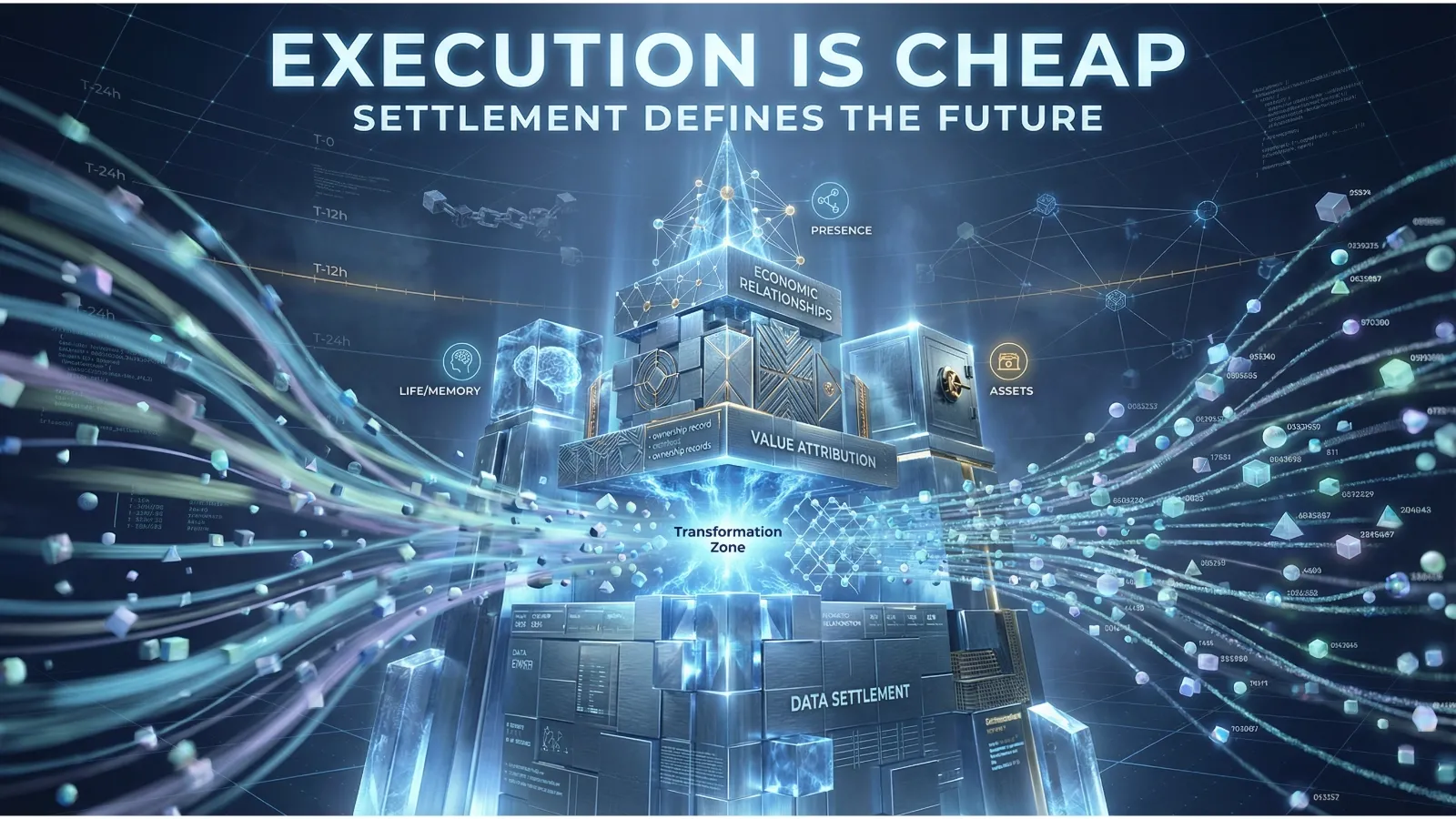
The industry has made impressive progress—but it’s also quietly stuck.Because intelligence is no longer the bottleneck.Today, executing an AI task is cheap. Spawning an agent is cheap. Even running thousands of agents in parallel is cheap. What remains expensive, fragile, and fundamentally unsolved is something far less glamorous:

AI Dataverse 發表在 痞客邦 留言(0) 人氣()

Alive Check
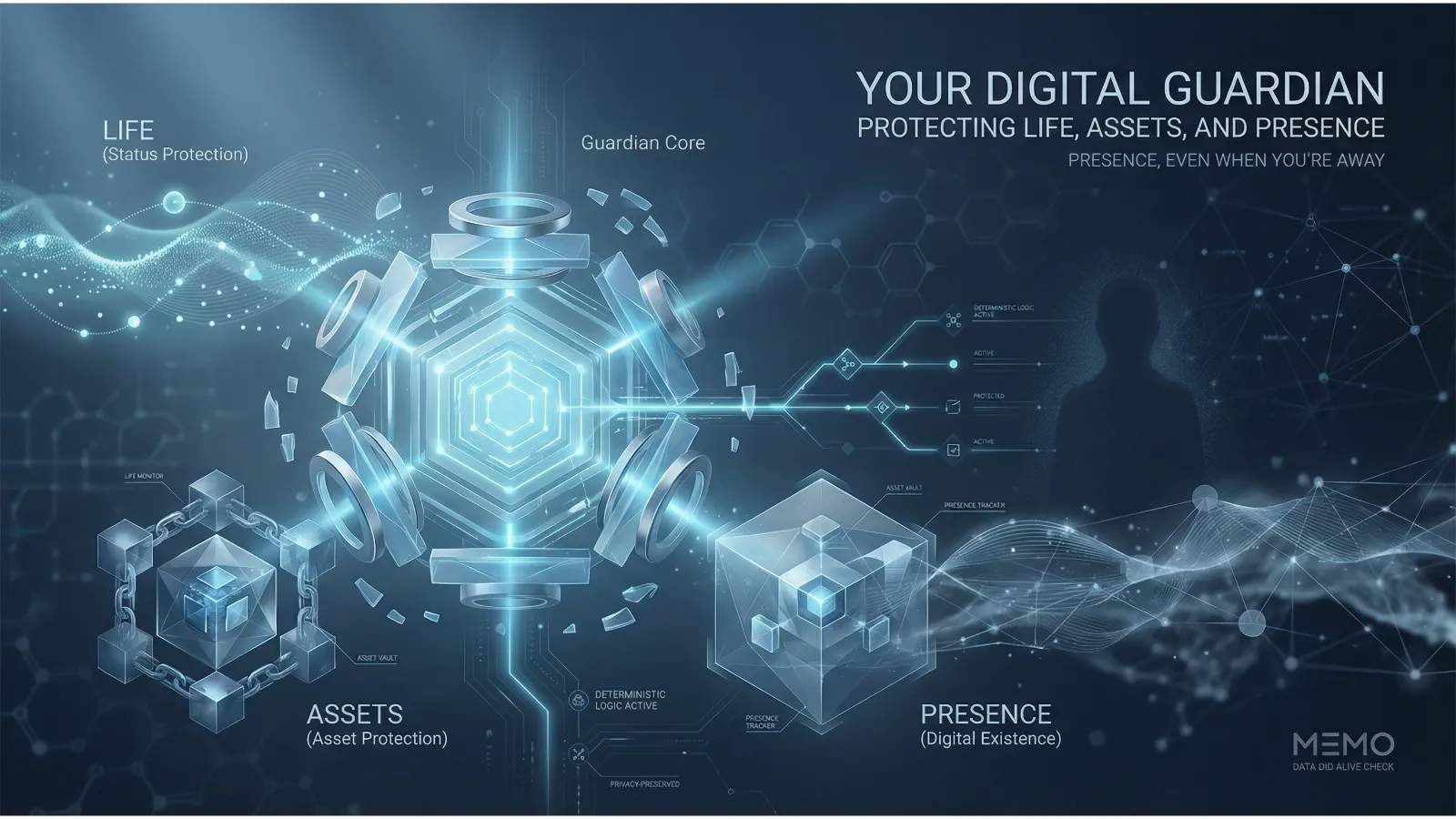
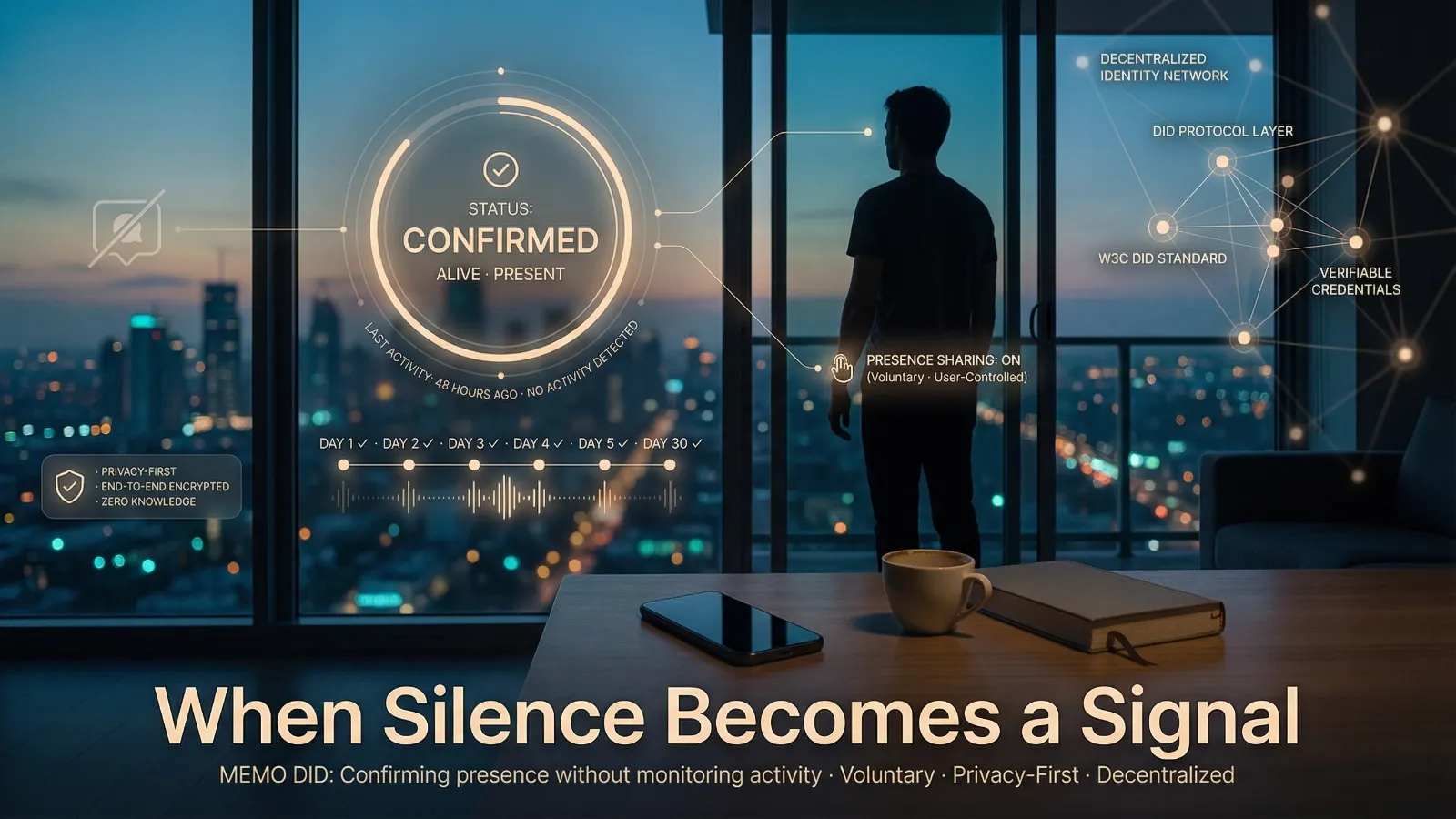
1. Rethinking Digital IdentityIn today’s hyper-connected world, our digital selves have become as important as our physical presence. Social accounts, cloud files, crypto wallets, and decentralized identities collectively define who we are online. Yet while visibility has increased, the assurance of presence remains fragile.Traditional digital identity systems are static—they confirm who you are but do not act when you are absent. MEMO’s Data DID challenges this notion by introducing Alive Check, a Web3-native module that transforms digital identity from a passive credential into a living, caring guardian. Alive Check doesn’t just track; it ensures your presence is acknowledged, your assets protected, and your responsibilities fulfilled even when you cannot actively act.

AI Dataverse 發表在 痞客邦 留言(0) 人氣()

Alive Check


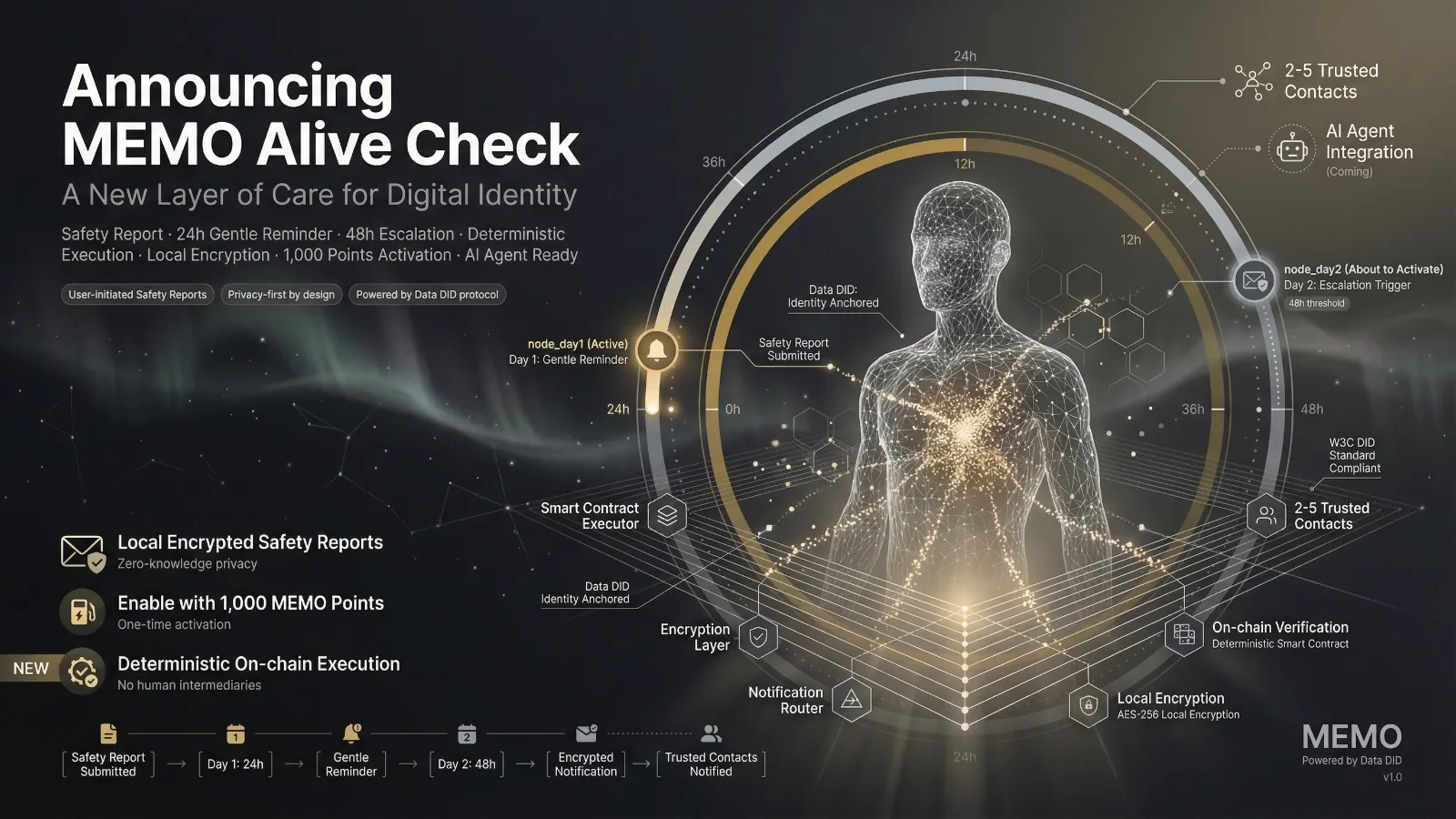
In an era where digital civilization has reached unprecedented maturity, personal assets are no longer confined to the physical world. Cryptocurrencies, decentralized identities, social accounts, and cloud-based data now form an essential layer of individual ownership, agency, and value.Yet as our digital presence grows stronger, an uncomfortable question quietly emerges:What happens when the person behind the identity is no longer able to show up?If a user becomes unreachable due to unforeseen circumstances, can their safety be addressed in time? And if access to the network is lost, do their data and digital assets become permanently locked in an irreversible loop?These questions have long existed at the edges of Web3 — rarely discussed, never solved.Today, MEMO introduces its answer.MEMO officially announces the launch of Alive Check, a core security module under the Data DID system — designed to bring care, continuity, and determinism into decentralized identity.

AI Dataverse 發表在 痞客邦 留言(0) 人氣()


In early 2026, a simple question captured the attention of millions in China:“Are you dead?”Behind the shocking phrasing was a minimalist app that did almost nothing—except one thing that mattered. It allowed users to confirm they were okay, and if they didn’t, someone else would know.The app’s explosive popularity was not driven by novelty alone. It surfaced something deeper and far more universal:
a growing anxiety around absence, isolation, and being unseen in a hyper-connected world.For MEMO, this moment is not about copying a viral idea.
It is about understanding what the world is quietly asking for—and responding with infrastructure, not gimmicks.

AI Dataverse 發表在 痞客邦 留言(0) 人氣()

Digital Identity


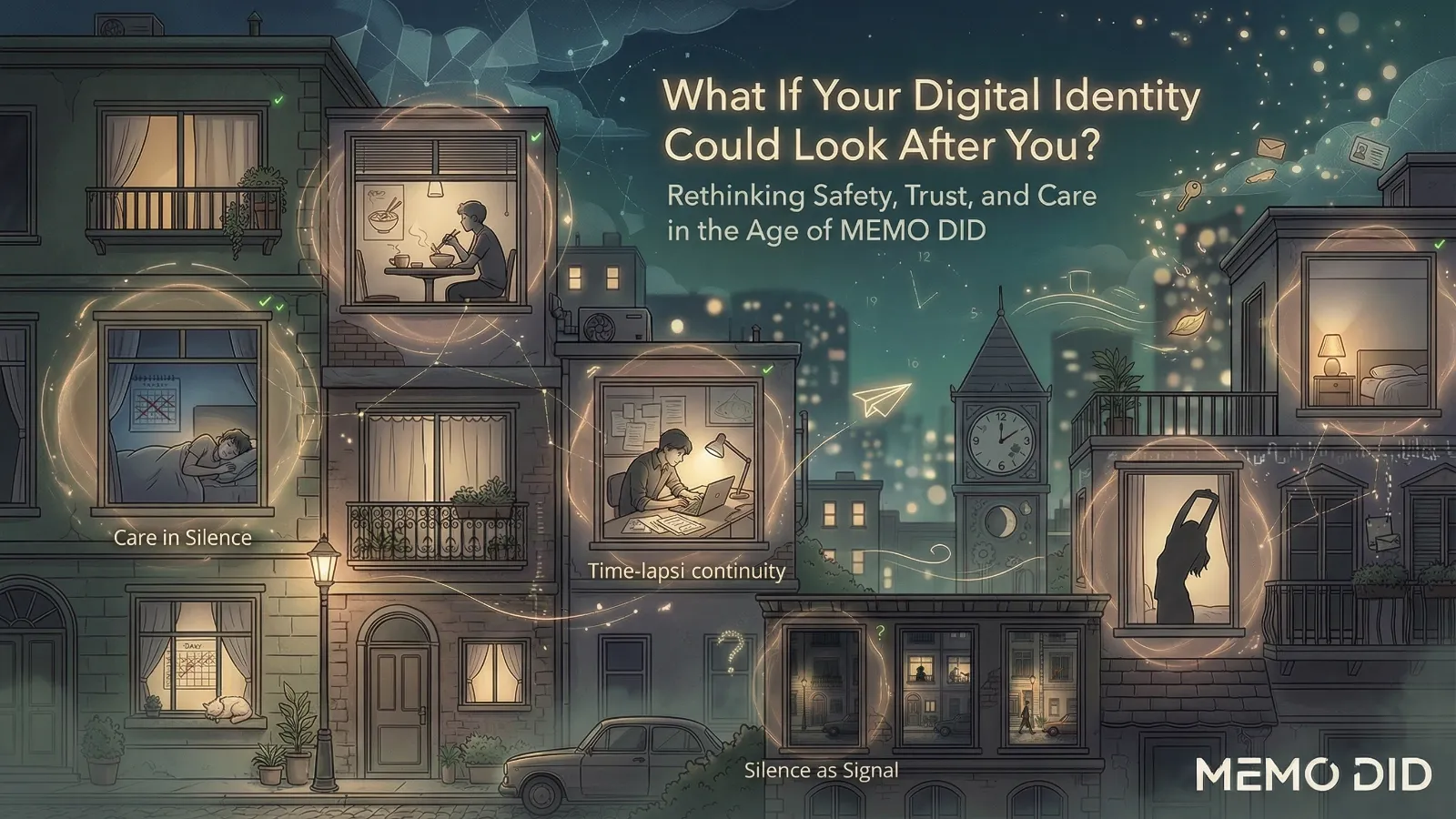
What if your digital identity could do more than prove who you are?What if it could quietly look after you—without watching you, tracking you, or turning your life into data?For most of the internet’s history, digital identity has been reactive. You use it when you log in, when you sign a transaction, or when you authorize access. Once the task is complete, identity disappears into the background.But human life doesn’t work in transactions.
Safety, trust, and care are continuous.At MEMO, we believe decentralized identity is ready for a deeper role—one that reflects how people actually live.

AI Dataverse 發表在 痞客邦 留言(0) 人氣()

1 2 3 4 5
Blog Stats
⚠️

成人內容提醒

本部落格內容僅限年滿十八歲者瀏覽。
若您未滿十八歲,請立即離開。

已滿十八歲者,亦請勿將內容提供給未成年人士。